Sanding advice: which grit and which disc?
With the right grit and the right disc you sand faster, cleaner and with less abrasive. Below are the basics, as we also explain them to parquet installers.
The grit
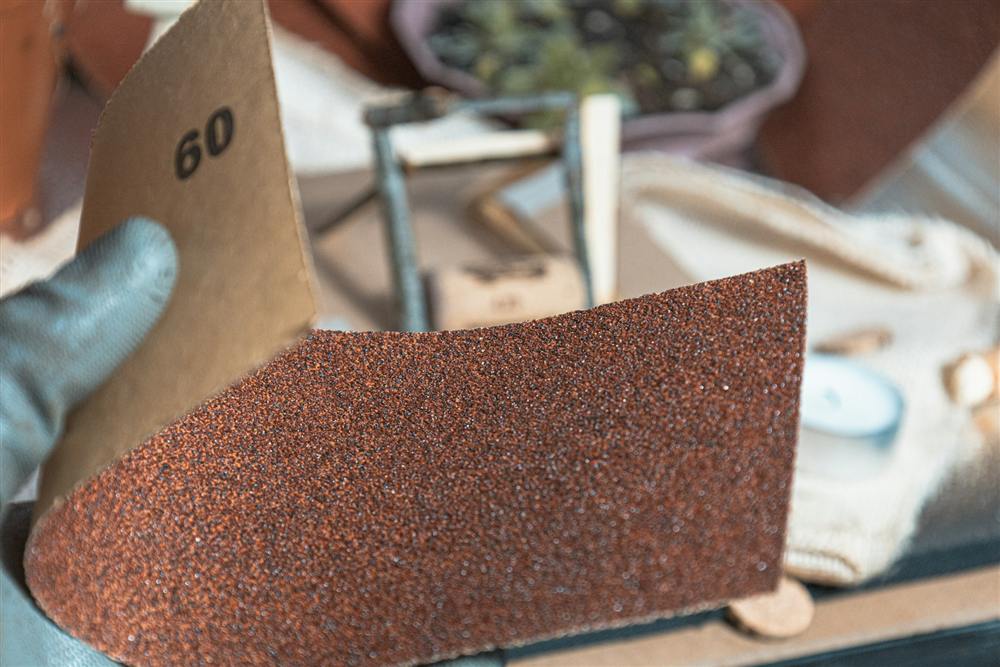
The number indicates the coarseness: the lower the number, the coarser the grit. Click a grit to see the matching products.
Sanding in steps
Start as fine as the job allows. A coarser grit removes material faster, but also leaves deeper scratches that you then have to sand out again.
- Old lacquer, paint or heavily soiled wood: start coarse, with grit 24, 36 or 40.
- Oiled or slightly worn floor: starting with grit 60 or 80 is often enough.
- Then work step by step towards fine, for example 40, 60, 80, 100 and 120. Do not skip more than one grit step, otherwise scratches from the previous pass remain visible.
- The finishing grit is usually 120. Follow the advice of the manufacturer of your oil or lacquer.
- Edges and corners are sanded in the same grit sequence as the main surface, so that the sanding finish is the same everywhere.
- Work dust-free: vacuum away the dust between passes. Otherwise loose grains from a coarser pass will cause scratches in the fine pass.
Zirconia or ceramic?
Tough and aggressive
The sharp zirconia grit is tough and keeps cutting for a long time. Strong in coarse work and intermediate sanding, with a keen price-quality ratio. Available in discs of 115, 150 and 178 mm and belts of 750 x 200 mm.
Harder and sharp for longer
Ceramic grit is harder than zirconia, lasts longer and gives a clean sanding finish. A good choice if you sand a lot of square metres or want a fine finish.
Which disc fits my machine?
Look at the diameter, the fixing (hook and loop or centre hole) and the hole pattern of your machine. If in doubt, send us a photo of your machine via WhatsApp on +31 6 1696 1909.
| Machine | What fits |
|---|---|
| Bona Flexisand, Kiwi Floor 400 and other machines with a 150 mm hook and loop backing pad | Zirconia 150 mm hook and loop, Ceramic 150 mm hook and loop, Flexible interface pad SOFT |
| Festool Rotex and other hand-held sanders with 17 holes | Zirconia 150 mm, 17 dust holes, Ceramic 150 mm, 17 dust holes |
| Edge sander with centre hole (central nut) | Zirconia 178 mm with centre hole, Ceramic 178 mm with centre hole |
| Floor sanding machine with 178 mm sanding plate, larger edge sander without central nut | Ceramic 178 mm |
| Flex Pinokkio and other machines with a 115 mm backing pad | Zirconia 115 mm, Ceramic 115 mm |
| Belt sander 750 x 200 mm, such as Lägler Hummel, Bona Belt and Frank | Zirconia sanding belts, Ceramic sanding belts |
Interface pad: when?
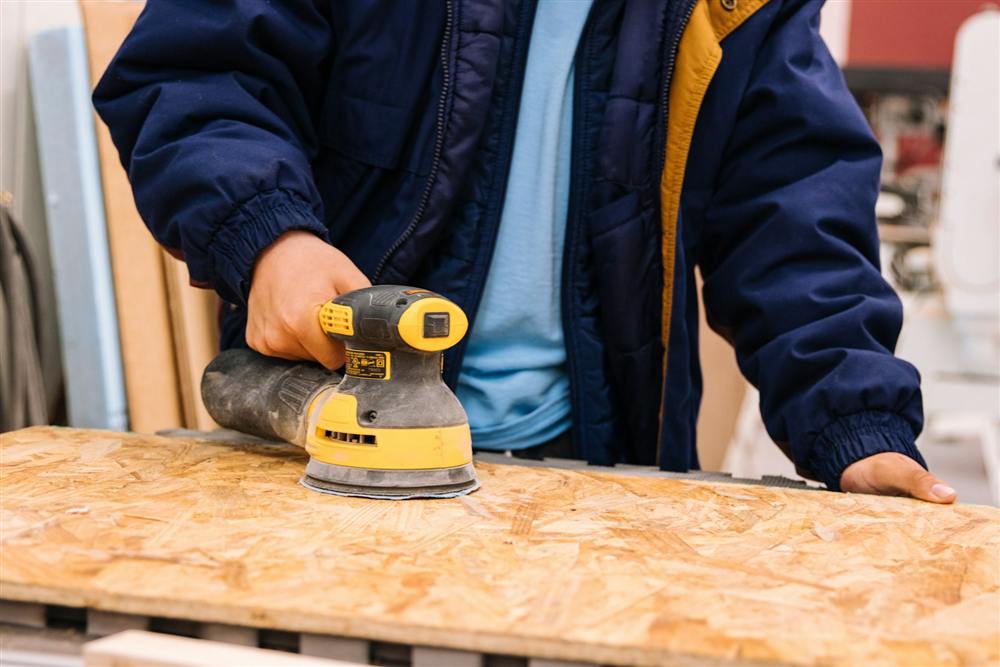
A flexible interface pad of soft foam rubber goes between the backing pad and the sanding disc. It follows the surface and spreads the pressure, which gives a more even sanding finish with fewer scratches in medium and fine sanding.
For planetary floor sanding machines we have also developed our own system with interchangeable pressure points: the Pressure Point Sanding System.
Frequently asked questions
How many discs do I need for a floor?
That depends on the area, the condition of the floor and the number of sanding passes. Tell us the square metres and the condition of the floor, and we will work it out with you.
Can I combine zirconia and ceramic?
Yes. For example, you can sand coarse with zirconia and finish fine with ceramic. Do keep to the same grit sequence.
What does "special design" mean for the 150 mm discs?
That is our own pattern of 9 dust holes, matched to our interface pad with pressure points. The coarsest grits have no holes.
Still not sure?
Call or WhatsApp us about your machine and your job, and together we will find the right disc and grit.